

Thank you for Subscribing to Med Tech Business Review Weekly Brief

Hospital da Luz
Bruno Campos,Head of Information Systems
The new Phygital, where Digital meet Physical Care
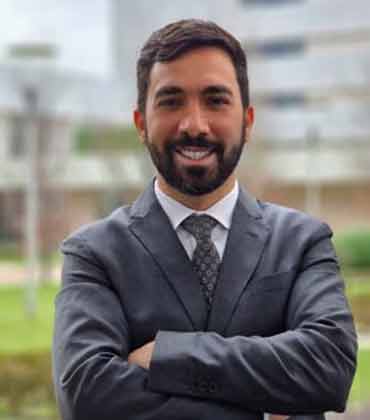
Bruno Campos
Over the past two decades, many everyday experiences have turned digital. Technological enablement, digitization, interoperability, and automation are affecting industries today in profound ways. Healthcare delivery is no exception.
At the height of the Covid-19 pandemic, one word, besides [social] distancing and lockdown, that was on everyone’s mind was ‘Phygital’. Phygital is coming together of two worlds - physical reality and digital technology. The global digital healthcare market is projected to expand nearly 6 times in size to USD 660 billion by 2025. The convergence of physical and digital, boosting innovation in healthcare, will be the driving force for this exponential growth. This will not only transform the way healthcare services are delivered, but will also revolutionize the patients’ journey. Hospitals, for example, won´t just be physical locations with waiting rooms, beds and labs. Instead these, that were traditionally the center of healthcare delivery systems, will need—or will be forced—to redefine themselves, from a technology as well as a design perspective. Smart technologies can create timely, convenient, and efficient patient experiences. In a Phygital hospital the patient would be truly at the center of the network. Maria can reap the benefits of this future, as she, in hers 45’s years, is fully engaged with her health and wellbeing, supported by the most recent wearables and health technology. With those she continuously measures and records her health data in real time, such as, heart rate (HR), respiratory rate (RR), oxygen saturation (SpO2), Blood Pressure (BP), temperature, and biometric data weight and body mass index (BMI). All this personal health information is stored in a form of Digital Twin (DT), as single Human centered record, using Blockchain networks and non-fungible tokens (NFTs). This technology implements digital contracts and gives Maria the opportunity to specify who can access her personal health information and to track how it is shared. Additionally, Maria`s Digital Twin offers an integrated view of her health data including allergies, conditions, immunizations, lab results, medications, procedures, and vitals, using Fast Healthcare Interoperability Resources (FHIR) as a standard for exchanging electronic health records across multiple institutions, like government, pharmacies, laboratories, hospitals, and other healthcare providers. The access to mHealth apps anytime and anywhere, allows Maria to track her health status, schedule video-consults, chat and share results with her doctors, request refills and schedule hospital visits in a timely, convenient, and efficient manner. "The future of Smart Hospitals is Digital, Connected, Intelligent and Humanized" Taking advantage of integrated view of Maria´s health data, AI-powered interfaces provide early warnings scores as well as advise on self-management, and at the same time offering a self-triage service via chatbot interaction for the assessment and diagnosis of certain health conditions, which suggests the appropriate next step towards an onsite consult. In one of those assessments, Maria is advised to visit her GP, since her last blood glucose, and heart rate results were high. When she arrives at the hospital, mHealth App identifies her location, allows self-check in, and drives Maria’s to the appropriate waiting room, using augmented reality solutions through Bluetooth BLE technology. Once in the consultation room, after a quick check of her health status, the doctor access Maria’s Digital Twin and checks the latest health information from the different sources. It really seems that her blood glucose, as well her heart rate, are very high some days from now, as well a reduced blood pressure. She is directed to the emergency department, as she could have inaugural diabetes with ketoacidosis and later admitted to the ICU. Asresult of a respiratory failure, and coma complicating the course of diabetic ketoacidosis Maria is transferred to the ICUroom. Thanks to IEEE Service-oriented Device Connectivity (SDC) standards, one central display outside of the isolation room display of current measurements and allows physicians and nurses to monitor the patient and change device settings without entering the isolation room itself. Regular checks of patient status on the patient monitoring as well as changes to therapies such as ventilators and infusion pumps could be managed remotely. Maria is in coma. The ICURoom is set to quiet mode, if an alarm occurs, the alarm is forwarded to the mobile device or central station, and it is not acoustically announced at the medical device. Maria needs a chest x-ray and, since both,the mechanical ventilator and portable x-ray machine are SDC-enabled, it his automatically acquired in the max inspiratory phase optimizing the image quality. A couple of days later, Maria has recovered from coma and is transferred to the inpatient ward. A mobile Ward Round application allows the display of values and trends of measurements and settings, as well as alarm settings and the history of medical devices that were previously or are currently connected. All this information is now integrated with Maria´s Electronic Health Record. Due to her age, and family history of diabetes, Maria´s doctor orders a few genetic tests. Her genetic profile is considered in the order of a new dietary pattern and alsoin optimizing drugs prescription, taking in account the weight of this profile in pharmacokinetics and pharmacodynamics, achieving the desired drug efficacy and avoiding or delaying the consequences of diabetes. Maria will gohome with a discharge letter and a personalized health plan, as a form of Digital Therapeutics, automatically integrated in Maria´s Digital Twin on her mHealth App, using FHIR standard. From now on, Maria´s health will be continuously monitored, supported by connected, intelligent, digital, and human centered technology.The articles from these contributors are based on their personal expertise and viewpoints, and do not necessarily reflect the opinions of their employers or affiliated organizations.
